
 Talk to Lawyer
 GST Legal Compliance Rules in India
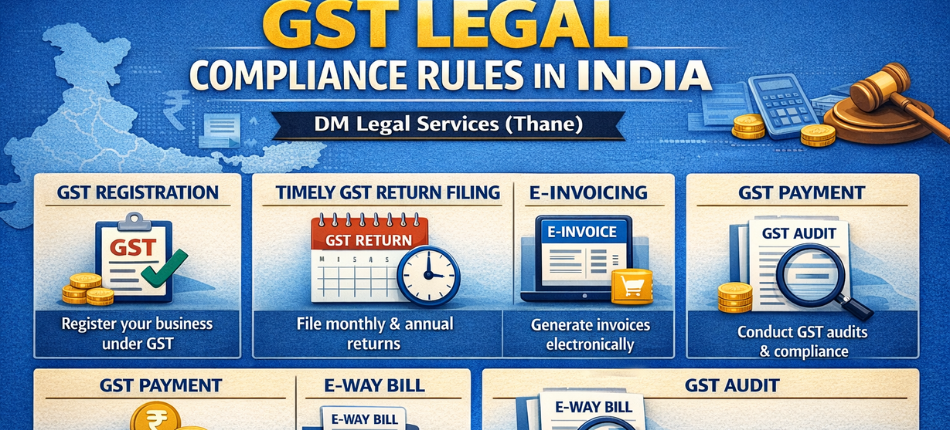
GST Legal Compliance Rules in India | Dm Legal Services – A Complete Guide for Businesses
Introduction
The Goods and Services Tax (GST) has transformed India’s indirect tax system by unifying multiple taxes into one structured framework. However, complying with GST regulations is mandatory for every registered business. Non-compliance can lead to heavy penalties, legal notices, and even cancellation of GST registration. Understanding GST legal compliance rules in India is essential for smooth business operations.
At DM Legal, we assist businesses in navigating complex GST compliance laws with precision and professionalism.
What is GST Compliance?
GST compliance refers to following all the legal rules and procedures prescribed under the GST Act, including:
-
Proper GST registration
-
Timely filing of GST returns
-
Maintaining accurate invoices and records
-
Payment of GST dues within deadlines
-
Responding to GST notices
Failure to comply can attract interest, penalties, and prosecution under the GST Act.
Key GST Legal Compliance Rules in India
1. GST Registration
GST registration is the first and most important step toward legal tax compliance in India. Any business whose annual turnover exceeds the prescribed threshold limit must register under the Goods and Services Tax Act. Additionally, businesses engaged in interstate supply, e-commerce operations, or specific notified categories are required to obtain mandatory registration regardless of turnover. Operating without proper GST registration can lead to heavy penalties and legal consequences. Proper registration ensures that a business can legally collect tax, claim Input Tax Credit (ITC), and conduct operations without regulatory interruptions.
2. Timely Filing of GST Returns
Timely filing of GST returns is a crucial compliance requirement under GST law. Registered taxpayers must file monthly, quarterly, and annual returns such as GSTR-1, GSTR-3B, and GSTR-9 within the prescribed deadlines. These returns provide details of sales, purchases, and tax payments to the government. Delay in filing returns results in late fees, interest on tax liability, and may even lead to suspension or cancellation of GST registration. Consistent and timely return filing not only avoids penalties but also ensures smooth business operations and maintains compliance credibility.
3. Accurate Tax Invoicing
Accurate tax invoicing is mandatory under GST regulations, as invoices form the foundation of tax reporting and Input Tax Credit claims. A valid GST invoice must contain essential details such as GSTIN of supplier and recipient, invoice number, date, HSN/SAC codes, description of goods or services, and applicable tax rates. Incorrect or incomplete invoices can result in denial of ITC, penalties, or legal scrutiny from tax authorities. Maintaining proper invoicing practices helps businesses remain compliant and reduces the risk of disputes during audits or assessments.
4. Input Tax Credit (ITC) Compliance
Input Tax Credit is one of the key benefits of the GST system, allowing businesses to reduce their tax liability by claiming credit for taxes paid on purchases. However, ITC can only be claimed if strict compliance conditions are met, such as possession of a valid tax invoice, supplier filing returns, and tax payment to the government. Businesses must regularly reconcile their purchase records with GSTR-2B to avoid mismatches. Incorrect or fraudulent ITC claims may lead to reversal of credit along with interest and penalties. Therefore, careful documentation and periodic reconciliation are essential for ITC compliance.
5. GST Audit & Assessment
GST audit and assessment are mechanisms used by tax authorities to verify the accuracy of returns filed and tax payments made by businesses. Authorities may issue notices, seek documents, or conduct detailed scrutiny of financial records. In certain cases, special audits may be ordered if discrepancies are suspected. Non-cooperation or improper record maintenance can lead to tax demands, penalties, and legal proceedings. Proper preparation, systematic record-keeping, and professional legal assistance are crucial to handle GST audits and assessments efficiently while safeguarding business interests.
Importance of Professional GST Legal Assistance
GST laws are frequently amended, making it challenging for businesses to stay fully compliant without expert guidance. Professional legal support ensures timely updates on regulatory changes, reduces compliance risks, and helps optimize tax liability within the legal framework. It also provides confident representation during departmental inquiries, audits, and proceedings.
Penalties for GST Non-Compliance
Non-compliance may result in:
-
Late filing penalty
-
Interest @ 18% per annum
-
100% tax penalty in fraud cases
-
Cancellation of GST registration
-
Prosecution in severe cases
Legal guidance is crucial to minimize risks.
Why Choose DM Legal for GST Compliance?
Choosing the right legal partner for GST compliance is crucial to avoid penalties, disputes, and unnecessary financial risks. DM Legal provides comprehensive GST legal services tailored to businesses of all sizes, ensuring complete adherence to statutory requirements. Our team offers expert GST litigation support, representing clients before tax authorities in cases involving notices, assessments, and disputes. We assist with GST registration and cancellation procedures, ensuring accurate documentation and smooth processing. Additionally, we handle GST notices with timely drafting of replies and professional representation to safeguard your interests. Our services also include GST audit assistance and strategic tax advisory to help businesses minimize liabilities while remaining fully compliant with the law. With a proactive and client-focused approach, DM Legal ensures that your business operates confidently within the GST framework while protecting your long-term financial and legal interests.
GST Legal Compliance Rules in India GST Legal Compliance Rules in India GST Legal Compliance Rules in India GST Legal Compliance Rules in India GST Legal Compliance Rules in India GST Legal Compliance Rules in India GST Legal Compliance Rules in India GST Legal Compliance Rules in India GST Legal Compliance Rules in India GST Legal Compliance Rules in India GST Legal Compliance Rules in India GST Legal Compliance Rules in India
 Previous Post
 Next Post