
 Talk to Lawyer
 Contract Law Basics for Startups
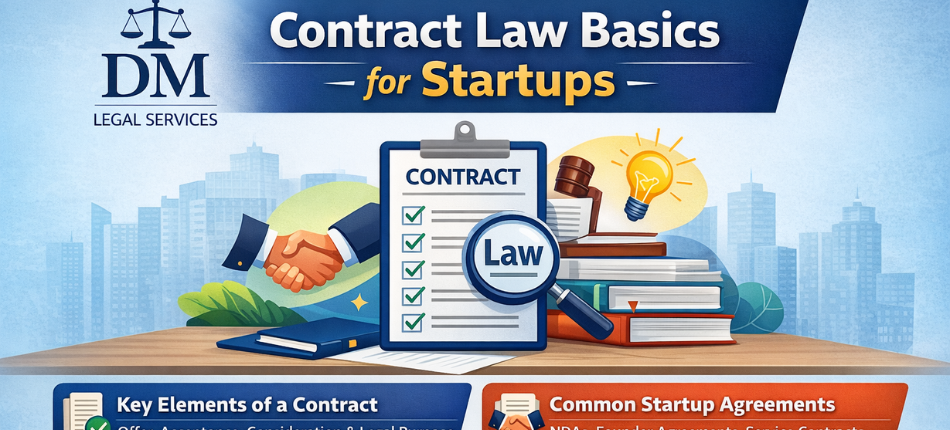
Contract Law Basics for Startups – A Complete Beginner’s Guide | Dm Legal Services
Introduction
For startups, contracts are the foundation of every business relationship—whether with co-founders, employees, vendors, or investors. A strong understanding of contract law helps startups avoid disputes, protect intellectual property, and ensure smooth operations. This guide explains the contract law basics for startups you must know.
What Is a Contract in Business Law?
A contract in business law is a legally enforceable agreement between two or more parties that defines their rights, duties, and obligations in a commercial relationship. It is formed when one party makes an offer and the other accepts it with free consent, supported by lawful consideration and a legal purpose. Business contracts help ensure clarity, accountability, and protection for all parties involved by clearly outlining terms such as scope of work, payment, timelines, confidentiality, and dispute resolution. In a commercial environment, contracts act as a safeguard against misunderstandings, reduce legal risks, and provide a legal remedy in case of breach.
The Role of Contracts in Startup Growth
Contracts define expectations, responsibilities, and remedies in case something goes wrong. For startups dealing with rapid growth and multiple stakeholders, contracts bring clarity and structure to business operations.
Key Contract Clauses Every Startup Should Understand
1. Scope of Work Clause
This clause clearly defines the services, deliverables, responsibilities, and timelines agreed upon by the parties. It helps prevent misunderstandings by setting clear expectations and measurable outcomes.
2. Payment & Termination Terms
Payment terms specify the amount, schedule, and mode of payment, while termination terms explain how and when the contract can be ended. These provisions protect both parties from financial loss and abrupt contract breaches.
3. Confidentiality Clause
The confidentiality clause safeguards sensitive business information shared during the agreement. It prevents unauthorized disclosure of trade secrets, data, and proprietary information.
4. Intellectual Property Rights
This clause determines who owns the intellectual property created under the contract. It ensures the startup retains or lawfully acquires rights over designs, software, content, or inventions.
5. Dispute Resolution Clause
The dispute resolution clause outlines how conflicts will be resolved, such as through mediation, arbitration, or court proceedings. It helps save time and costs by providing a predefined resolution mechanism.
Common Contracts Used by Startups
Startups typically rely on multiple agreements, including:
-
Founder & Co-Founder Agreements
-
Employment & Consultant Agreements
-
Vendor & Service Agreements
-
Non-Disclosure Agreements (NDAs)
-
Client & Customer Contracts
Each of these contracts plays a crucial role in defining rights, responsibilities, and risk allocation.
Risks of Poorly Drafted Contracts
Poorly drafted contracts expose businesses to significant legal and operational risks. Ambiguous or incomplete terms often lead to legal disputes and financial losses, draining time, money, and management focus. Without clear intellectual property clauses, startups risk losing ownership of critical innovations, designs, or software. Weak contracts may also result in a breach of compliance obligations, attracting penalties and regulatory scrutiny. Additionally, unresolved disputes and contract failures can cause serious damage to brand reputation, affecting trust among clients, investors, and partners. Startups lacking proper contracts frequently face difficulties during funding rounds and audits, as investors and due diligence teams closely examine legal documentation before committing capital.
Why Startups Should Prioritize Proper Contracts
Prevents misunderstandings and disputes
Clear and well-defined contracts set expectations for all parties involved. This reduces ambiguity and helps avoid conflicts arising from differing interpretations of responsibilities or terms.
Protects business interests and intellectual property
Contracts safeguard confidential information, proprietary data, and intellectual property through specific clauses. This ensures the business retains ownership and control over its valuable assets.
Builds credibility with investors and partners
Professionally drafted contracts demonstrate strong governance and legal preparedness. This builds trust and confidence among investors, stakeholders, and business partners.
Ensures compliance with legal requirements
Proper contracts align business operations with applicable laws and regulations. This minimizes legal risks, penalties, and ensures smoother audits and regulatory checks.
How DM Legal Services Supports Startups
DM Legal Services assists startups with:
-
Customized contract drafting
-
Contract review and risk assessment
-
Legal compliance and statutory support
-
Ongoing contract management advisory
Their startup-focused approach ensures practical, business-friendly legal solutions.
Legal Compliance and Contract Enforcement
Contracts must comply with applicable laws to be enforceable. Regular contract reviews ensure alignment with evolving regulations and business models.
Conclusion
Understanding contract law basics is essential for startup success. Well-drafted contracts not only protect your business but also enable long-term stability and growth. Professional legal support ensures your agreements are enforceable, clear, and future-ready.
Contract Law Basics for Startups Contract Law Basics for Startups Contract Law Basics for Startups Contract Law Basics for Startups Contract Law Basics for Startups Contract Law Basics for Startups Contract Law Basics for Startups Contract Law Basics for Startups Contract Law Basics for Startups Contract Law Basics for Startups
 Previous Post
 Next Post