
 Talk to Lawyer
 When to Approach Consumer Court in India
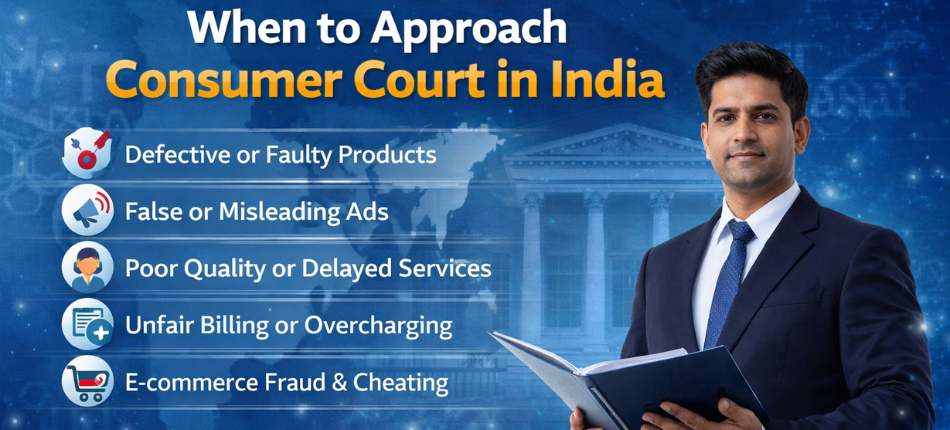
When to Approach Consumer Court in India – A Complete Guide by DM Legal Services
In today’s marketplace, consumers often face issues such as defective products, poor services, misleading advertisements, and unfair trade practices. Unfortunately, many people do not know when they are legally eligible to approach the consumer court. DM Legal Services offers expert guidance to help individuals understand their rights and take timely legal action under the Consumer Protection Act, 2019.
Learn when to approach consumer court in India for issues like defective products, poor services, fraud, or unfair trade practices. Understand eligibility, timelines, and the right legal steps to protect your consumer rights.
What is the Consumer Court?
Consumer courts in India are special tribunals established to resolve disputes between consumers and service providers or sellers. Their primary objective is to provide quick, affordable, and effective justice for consumers facing exploitation. These courts deal with complaints related to goods, services, online transactions, e-commerce fraud, and unfair business practices.
Understanding Consumer Protection in India
Under the Consumer Protection Act, 2019, every buyer of goods or services is protected from exploitation. Consumer courts handle disputes related to:
- Defective goods
- Poor services
- Contract breaches
- Misleading advertisements
- E-commerce issues
- Overcharging or hidden fees
These courts ensure fair compensation and timely justice.
Situations Where You Should Approach Consumer Court
Product Not Working as Promised
If a product you purchased does not perform as advertised, stops working shortly after purchase, or fails to meet the expected standard of quality, you have the right to approach the consumer court. Many consumers face issues such as defective electronics, malfunctioning appliances, or low-quality goods that do not match the seller’s claims. Before filing a complaint, you must first contact the seller or manufacturer for a replacement or refund. If they refuse, delay, or deny your request without valid reason, the consumer court becomes the appropriate legal remedy to ensure you receive fair compensation.
B. False or Misleading Advertisements
Consumers are often influenced by attractive ads, but when these advertisements offer exaggerated claims, fake benefits, or incorrect information, they become grounds for legal action. Whether it’s a health supplement promising miraculous results or a mobile provider guaranteeing speeds they can’t deliver, misleading advertisements violate consumer rights. If you have purchased a product or service based on a false claim and suffered a loss, you can seek justice through the consumer court. This ensures accountability and discourages companies from deceiving customers.
C. Poor Quality or Delayed Services
When service providers fail to deliver what they promise—such as late delivery, incomplete work, or substandard quality—it becomes a valid reason to approach consumer court. Examples include a repair service that damages your product, a travel agent who cancels a confirmed booking, or a construction contractor who delivers poor workmanship. Since consumers pay for timely and high-quality service, any negligence or delay amounts to deficiency in service under Indian law. If the provider does not resolve the issue through customer support, filing a complaint in consumer court can help recover losses or demand compensation.
D. Unfair Billing or Overcharging
Many consumers face issues like being billed extra, charged hidden fees, or billed for services/products they never used. Restaurants, telecom companies, utility providers, and online platforms sometimes add unnecessary charges or inflate bills without clear explanation. If the company refuses to correct the billing error even after repeated complaints, you are entitled to file a case in the consumer forum. The consumer court helps ensure transparency, protects your financial rights, and penalizes businesses that engage in unfair pricing practices.
E. Cheating in Online Transactions
With online shopping becoming common, cases of fraud, incorrect products, payment failures, or unresponsive sellers are increasing. If you receive a fake or damaged product, do not get your refund, or are charged but never receive your order, you can file a complaint under consumer laws. Consumer courts strongly support victims of e-commerce fraud and help them obtain refunds, replacements, or compensation. When customer support fails to resolve your issue, approaching the consumer court becomes an effective and legally supported solution.
F. Warranty and Guarantee Violations
Manufacturers and sellers must honor warranties and guarantees on their products. If they refuse to repair, replace, or refund a product covered under warranty, you can legally challenge them in consumer court. This is common with electronics, vehicles, appliances, and gadgets where companies deny support despite clear warranty terms. Consumer courts ensure that companies uphold their contractual obligations and protect customers from financial loss due to negligence or intentional refusal to provide after-sales service.
Steps to Take Before Approaching Consumer Court
- Send a written notice to the seller/service provider
- Keep all receipts, bills, warranty cards, and communication
- Give them a reasonable period to resolve the issue
If they fail to respond, filing a complaint becomes the next legal step.
When NOT to Approach Consumer Court
You should avoid approaching the consumer court when the issue does not qualify as a consumer dispute, such as matters involving employment, rental agreements, or personal disputes. Consumer courts also do not entertain cases without proper invoices, warranty proof, or documentation. If the claim is extremely small and the legal process may cost more than the compensation, it’s better to seek alternative resolutions. Additionally, cases that are already under trial in another court or matters related to criminal offenses cannot be filed in consumer court. Always consult a legal expert like DM Legal Services to determine the right forum.
How DM Legal Services Supports You Legally
DM Legal Services helps clients by:
- Assessing the complaint’s validity
- Drafting effective legal notices
- Filing the case in the appropriate forum
- Representing clients throughout the process
- Ensuring rightful compensation within legal timelines
Conclusion
You should approach consumer court whenever your rights are violated, your money is misused, or the seller/service provider refuses to resolve the issue. With professional legal support from DM Legal Services, fighting consumer disputes becomes simpler, faster, and more effective.
When to Approach Consumer Court in India When to Approach Consumer Court in India When to Approach Consumer Court in India When to Approach Consumer Court in India When to Approach Consumer Court in India When to Approach Consumer Court in India When to Approach Consumer Court in India When to Approach Consumer Court in India When to Approach Consumer Court in India When to Approach Consumer Court in India When to Approach Consumer Court in India When to Approach Consumer Court in India
 Previous Post
 Next Post