
 Talk to Lawyer
 Child Harassment Laws in India
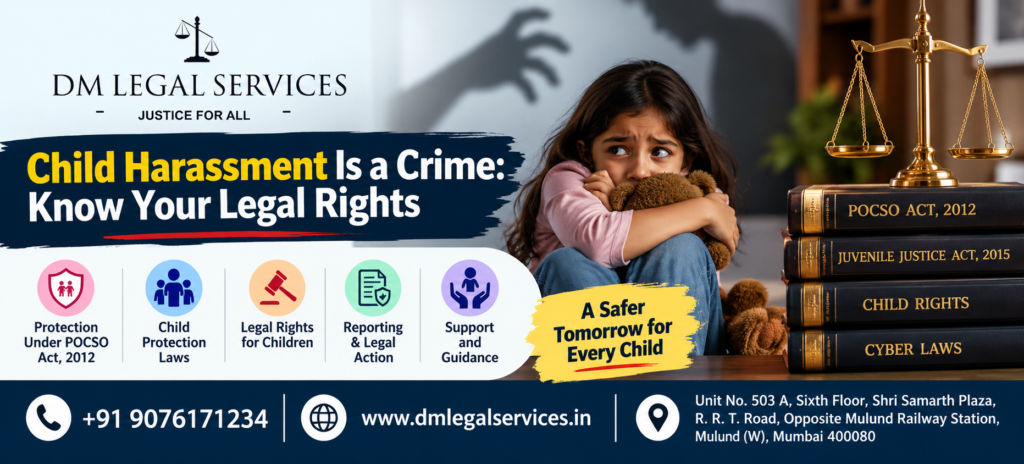
Child Harassment Is a Crime: Know Your Legal Rights – Dm Legal Services
1. Introduction
Every child deserves to grow up in a safe, respectful, and supportive environment. Unfortunately, many children experience physical abuse, emotional mistreatment, sexual harassment, bullying, and online exploitation. Such experiences can seriously affect their emotional well-being, confidence, education, and overall development.
Understanding Child Harassment Laws in India is essential for parents, teachers, guardians, and communities to recognize harmful behaviour, protect children, and take appropriate legal action.
India has established several legal protections for children, including the Protection of Children from Sexual Offences (POCSO) Act, 2012, the Juvenile Justice (Care and Protection of Children) Act, 2015, and relevant provisions of criminal and cyber laws.
However, not every unpleasant interaction or instance of bullying automatically constitutes a criminal offence. The applicable legal provisions depend on the nature, severity, and circumstances of the conduct.
At DM Legal Services, individuals and families can seek legal guidance to better understand their rights, complaint procedures, and available legal remedies.
This article explains the major child protection laws in India, different forms of child harassment, reporting procedures, potential punishments, and the importance of protecting children’s legal rights.
2. What Is Child Harassment?
Child harassment is a broad term describing harmful, threatening, abusive, or exploitative behaviour directed toward a child.
Such behaviour may occur at home, school, public places, educational institutions, or through digital platforms.
Harassment may involve physical violence, intimidation, sexually inappropriate behaviour, threats, humiliation, or exploitation.
Common Forms of Child Harassment
Physical Abuse: Hitting, kicking, assaulting, or physically harming a child.
Emotional Abuse: Repeated humiliation, threats, intimidation, or degrading treatment that may harm a child’s emotional well-being.
Sexual Harassment: Sexual remarks, inappropriate sexual advances, sexual intimidation, or other conduct covered by applicable sexual offence laws.
Cyber Harassment: Online threats, sexual exploitation, abusive messages, impersonation, or unlawful sharing of private information or images.
Bullying: Repeated intimidation, humiliation, or aggressive behaviour, including certain forms of school and online bullying.
Neglect and Cruelty: Serious neglect, abandonment, or abuse by a person responsible for a child’s care.
The legal consequences vary according to the conduct involved and the applicable legislation.
3. Child Harassment Laws in India: Important Legal Protections
Indian law provides multiple protections intended to safeguard children from abuse, exploitation, violence, and neglect.
3.1 Protection of Children from Sexual Offences (POCSO) Act, 2012
The POCSO Act is a major law designed to protect children below 18 years of age from sexual offences.
It addresses sexual assault, sexual harassment, and offences involving child sexual abuse material.
Important protections include:
- Legal provisions addressing sexual offences against children.
- Special procedures for recording children’s statements.
- Safeguards concerning children’s identity and privacy.
- Special Courts for the trial of offences.
- Reporting requirements for suspected or known offences.
- Procedures intended to reduce additional distress during legal proceedings.
The POCSO Act applies to children of all genders.
3.2 Juvenile Justice (Care and Protection of Children) Act, 2015
The Juvenile Justice Act establishes a framework for the care, protection, rehabilitation, and welfare of children.
Section 75 addresses cruelty toward children by persons having charge or control over them.
The law also provides mechanisms involving Child Welfare Committees and other child protection authorities.
Its objective includes protecting vulnerable children and supporting their rehabilitation and reintegration.
3.3 Bharatiya Nyaya Sanhita (BNS), 2023
The Bharatiya Nyaya Sanhita, which came into force on 1 July 2024, contains criminal provisions relevant to certain offences involving children.
Depending on the facts, offences involving assault, criminal intimidation, kidnapping, sexual offences, or exploitation may attract applicable BNS provisions.
For incidents occurring before the change in criminal law, earlier legislation may remain relevant according to the applicable legal framework.
3.4 Information Technology Act, 2000
The Information Technology Act contains provisions relevant to certain forms of online sexual exploitation and unlawful electronic content involving children.
Section 67B addresses specified offences involving electronic material depicting children in sexually explicit acts and related prohibited conduct.
Other criminal laws may also apply to online threats, stalking, intimidation, or exploitation.
3.5 Right of Children to Free and Compulsory Education Act, 2009
The Right to Education Act supports children’s educational rights.
Section 17 prohibits physical punishment and mental harassment of children covered by the Act.
Schools and educational authorities have responsibilities concerning children’s safety and well-being.
Parents should understand that different legal provisions may apply depending on the child’s age, institution, and nature of the incident.
4. Understanding the POCSO Act and Children’s Legal Rights
The Protection of Children from Sexual Offences Act, 2012, provides a legal framework for addressing sexual crimes against children.
It recognizes that children require special protection and child-sensitive legal procedures.
Protection Against Sexual Assault
The Act defines and penalizes different categories of sexual assault against children.
The seriousness of the offence and applicable punishment depend on the statutory provisions and circumstances.
Protection Against Sexual Harassment
Section 11 defines specified forms of sexual harassment involving children.
These may include sexually inappropriate words, gestures, conduct, threats, or other acts meeting the statutory requirements.
Protection Against Sexual Exploitation
The Act addresses the use of children for pornographic purposes and certain related offences.
Child-Friendly Procedures
The law contains safeguards relating to recording statements, medical examinations, and court proceedings.
Protection of Identity
A child’s identifying details are subject to legal confidentiality protections.
Public disclosure of a child victim’s identity can create additional harm and may violate applicable law.
5. Physical Harassment and Abuse of Children
Physical abuse may involve hitting, kicking, pushing, assaulting, or other actions that cause physical harm.
Children may experience physical abuse in different environments, including homes, schools, and institutions.
Such conduct can lead to injuries, emotional distress, fear, and difficulties in daily functioning.
Warning Signs of Physical Abuse
Possible indicators include:
- Unexplained or repeated injuries.
- Fear of particular individuals or environments.
- Sudden behavioural changes.
- Avoidance of school or certain activities.
- Withdrawal from family or friends.
- Frequent complaints of physical discomfort.
These signs do not automatically prove abuse, but they may justify careful attention and professional assessment.
Where an offence is suspected, appropriate authorities should be contacted.
6. Emotional Harassment and Psychological Abuse
Emotional harassment can affect a child’s confidence, sense of security, and mental well-being.
It may involve repeated humiliation, intimidation, threats, verbal abuse, or controlling behaviour.
Children experiencing emotional mistreatment may become withdrawn, anxious, fearful, or reluctant to communicate.
Common Examples
- Repeatedly humiliating a child.
- Threatening a child with harm.
- Using persistent intimidation.
- Subjecting a child to degrading treatment.
- Creating fear through abusive behaviour.
Certain forms of serious emotional abuse or cruelty may attract legal consequences depending on the facts.
Parents and guardians should create a supportive environment where children feel comfortable discussing their experiences.
7. Cyber Harassment and Online Child Safety
Children increasingly use smartphones, messaging applications, online games, and social media platforms.
While digital technology offers educational and communication benefits, it may also expose children to online harassment and exploitation.
Common Online Risks
Cyberbullying: Repeated online humiliation, threats, or abusive messages.
Online Grooming: Attempts to manipulate a child for sexual exploitation.
Impersonation: Creating fake profiles to deceive, intimidate, or harm someone.
Sexual Exploitation: Coercing children into sexual conversations, images, or other exploitative activities.
Threats and Blackmail: Using digital communication to intimidate or pressure a child.
How Parents Can Protect Children Online
Parents should encourage open communication about online experiences and explain basic digital safety.
Children should understand the importance of protecting personal information and avoiding suspicious requests.
If online exploitation is suspected, preserve relevant non-explicit evidence such as usernames, message details, and account links.
Do not download, forward, or circulate child sexual abuse material.
8. Child Harassment in Schools: Rights and Responsibilities
Schools play an important role in maintaining a safe and supportive learning environment.
Children may experience bullying, intimidation, physical punishment, or inappropriate behaviour within educational settings.
Educational institutions should respond appropriately to complaints and follow applicable child protection requirements.
Responsibilities of Schools
Schools should establish suitable procedures for reporting concerns, addressing misconduct, and protecting children from retaliation.
Responsibilities of Teachers
Teachers should maintain respectful classroom environments and avoid prohibited physical punishment or mental harassment.
Responsibilities of Parents
Parents should listen carefully when children report uncomfortable experiences and communicate concerns to appropriate school authorities.
When Legal Action May Be Necessary
Where conduct involves suspected sexual offences, serious assault, threats, or other criminal acts, reporting to the police or relevant authorities may be necessary.
Internal school procedures should not be used as a substitute for mandatory reporting obligations under the POCSO Act.
9. How to File a Child Harassment Complaint in India
Knowing how to report suspected child abuse is an important part of understanding Child Harassment Laws in India.
Step 1: Ensure the Child’s Immediate Safety
If the child is in immediate danger, contact emergency services and arrange a safe environment.
Step 2: Contact the Police
A complaint concerning a suspected criminal offence can be made to the police.
For suspected POCSO offences, Section 19 establishes reporting requirements.
Step 3: Contact the Child Helpline
Call 1098 for child protection assistance.
For immediate emergencies, call 112.
Step 4: Provide Relevant Information
Share available information about the incident, including dates, locations, individuals involved, and any relevant witnesses.
Step 5: Preserve Available Evidence
Retain relevant messages, records, or documents without altering them.
Avoid repeatedly questioning the child or pressuring them to describe the incident.
Step 6: Seek Medical or Psychological Assistance
Where necessary, obtain appropriate medical care, counselling, or other professional support.
Step 7: Obtain Legal Guidance
A qualified legal professional can explain applicable laws, complaint procedures, and available remedies.
The exact reporting and investigation process depends on the nature of the alleged offence.
10. Punishment for Child Harassment Under Indian Law
There is no single punishment for every type of conduct described as child harassment.
Penalties depend on the specific offence, applicable statute, and circumstances.
Sexual Harassment Under POCSO
Section 12 provides punishment for sexual harassment as defined under Section 11, including imprisonment that may extend to three years and a fine.
Sexual Assault Under POCSO
Sexual assault offences may carry more serious punishments depending on their classification.
Cruelty Under the Juvenile Justice Act
Section 75 provides penalties for specified forms of cruelty toward children.
The punishment may vary depending on aggravating circumstances and applicable statutory provisions.
Cyber-Related Offences
Online sexual exploitation and certain unlawful electronic activities involving children may attract penalties under the Information Technology Act, POCSO Act, or other applicable criminal laws.
Criminal Intimidation and Assault
Threats or physical violence against children may attract relevant criminal provisions where the statutory elements are established.
The appropriate charges and penalties must be determined from the facts of each case.
11. Legal Rights of Children Experiencing Harassment
Children affected by abuse or exploitation have important legal protections.
Right to Safety
Children are entitled to protection from unlawful violence, abuse, and exploitation.
Right to Report Offences
Children and concerned individuals can report suspected offences through appropriate legal channels.
Right to Privacy
Applicable laws protect identifying information concerning child victims.
Right to Child-Sensitive Procedures
The POCSO Act includes procedures intended to reduce distress during reporting, investigation, and court proceedings.
Access to Legal Assistance
Eligible children and families may seek legal aid through appropriate legal services authorities.
Access to Rehabilitation and Support
Depending on the circumstances, children may be eligible for counselling, protection services, rehabilitation, and other support measures.
12. Importance of Reporting Child Harassment Early
Prompt reporting can be important for protecting children from continued harm.
It may also assist authorities in responding to suspected offences and preserving relevant evidence.
Parents and guardians should avoid dismissing complaints or assuming that a child is exaggerating.
A calm and supportive response can help children feel safer when discussing difficult experiences.
Where an offence is suspected, contacting appropriate authorities is preferable to attempting to resolve a serious criminal matter privately.
13. Role of Parents and Guardians in Preventing Child Harassment
Parents and guardians play a central role in supporting children’s safety.
Encourage Open Communication
Create an environment where children feel comfortable discussing uncomfortable or frightening experiences.
Teach Personal Safety
Explain age-appropriate personal boundaries, consent, and the importance of seeking help.
Monitor Online Safety
Discuss digital privacy, online risks, and responsible technology use.
Recognize Behavioural Changes
Pay attention to sudden changes in mood, sleep, school attendance, or social behaviour.
Respond Without Blame
If a child reports abuse, listen calmly and avoid blaming or pressuring them.
Seek Appropriate Assistance
Contact relevant authorities or qualified professionals when safety concerns arise.
Prevention requires cooperation among families, schools, communities, and child protection institutions.
14. How DM Legal Services Can Assist With Child Harassment Legal Matters
Understanding child protection legislation can be challenging, particularly when families are unfamiliar with legal terminology or complaint procedures.
DM Legal Services provides a point of contact for individuals seeking guidance on legal concerns and available remedies.
Depending on the circumstances and the professional services available, legal assistance may involve:
Understanding Applicable Laws
Explaining relevant provisions of the POCSO Act, Juvenile Justice Act, and other child protection legislation.
Guidance on Complaint Procedures
Helping individuals understand the appropriate authorities and processes for reporting suspected offences.
Legal Documentation
Providing guidance concerning relevant legal documents and procedural requirements.
Understanding Children’s Rights
Explaining legal protections relating to privacy, safety, and child-sensitive procedures.
Guidance on Further Legal Steps
Helping families understand when specialist legal representation, legal aid, or additional professional assistance may be required.
For legal enquiries, contact DM Legal Services.
Website: https://dmlegalservices.in/
Contact: +91 9076171234
Office Address: Unit No. 503 A, Sixth Floor, Shri Samarth Plaza, R. R. T. Road, Opposite Mulund Railway Station, Mulund (W), Mumbai – 400080.
Important: If a child is in immediate danger, contact emergency services or child protection authorities first rather than waiting for a legal consultation.
Conclusion
Children deserve protection, dignity, and the opportunity to grow in safe environments.
Understanding Child Harassment Laws in India helps parents, guardians, teachers, and communities recognize harmful conduct and respond appropriately.
The POCSO Act, Juvenile Justice Act, relevant criminal laws, and cyber legislation provide important protections against different forms of abuse and exploitation.
Timely reporting, child-sensitive responses, and access to appropriate professional support can play a vital role in protecting children.
Child Harassment Is a Serious Matter – Know Your Legal Rights
If you need guidance about child protection legislation, complaint procedures, or available legal remedies, contact DM Legal Services.
DM Legal Services – Justice for All
Website: https://dmlegalservices.in/
Contact: +91 9076171234
Address: Unit No. 503 A, Sixth Floor, Shri Samarth Plaza, R. R. T. Road, Opposite Mulund Railway Station, Mulund (W), Mumbai – 400080.
Child Helpline: 1098
Emergency Assistance: 112
Child Harassment Laws in India Child Harassment Laws in India Child Harassment Laws in India Child Harassment Laws in India Child Harassment Laws in India Child Harassment Laws in India Child Harassment Laws in India Child Harassment Laws in India Child Harassment Laws in India Child Harassment Laws in India Child Harassment Laws in India Child Harassment Laws in India Child Harassment Laws in India Child Harassment Laws in India Child Harassment Laws in India Child Harassment Laws in India Child Harassment Laws in India Child Harassment Laws in India Child Harassment Laws in India Child Harassment Laws in India Child Harassment Laws in India
 Previous Post