
Talk to Lawyer 9076171234

Child Protection Laws in India | Dm Legal Services
Child Protection Laws in India | Dm Legal Services

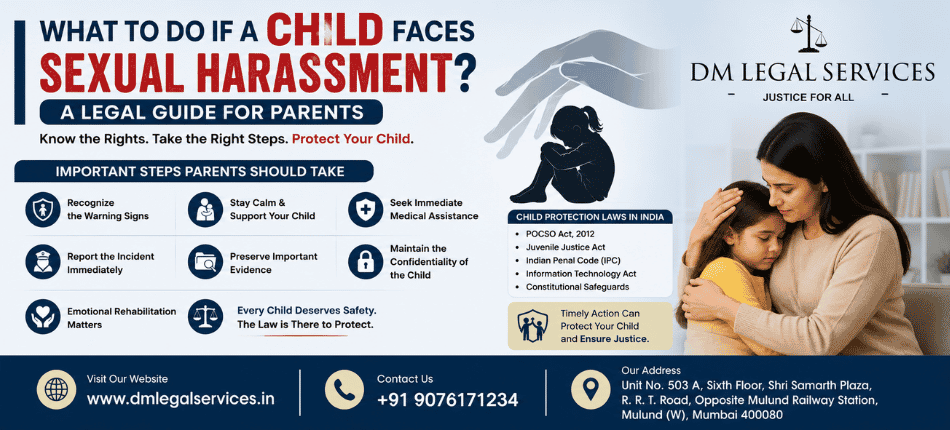
What to Do If a Child Faces Sexual Harassment? A Legal Guide for Parents | Child Protection Laws in India – Dm Legal Services

Child sexual harassment is one of the most traumatic experiences a family can face. Beyond the emotional impact, parents often struggle with confusion about legal procedures, reporting mechanisms, and protecting their child’s rights. Fortunately, child protection laws in India provide strong legal safeguards to ensure justice for child victims and strict punishment for offenders.

Understanding your legal rights and acting promptly can help protect your child while ensuring that the accused is held accountable under the law.


Understanding Child Sexual Harassment

Child sexual harassment includes any unwanted sexual behavior, inappropriate touching, exploitation, online grooming, exposure to explicit content, or any act that violates a child’s dignity and safety. Such incidents may occur at schools, tuition classes, public places, workplaces, online platforms, or even within trusted circles.

Parents should remember that children may not always express what happened immediately due to fear, confusion, shame, or threats from the offender. Early intervention and a supportive environment are crucial.

Child Protection Laws in India

India has established strong legal safeguards to protect children from sexual abuse, exploitation, and harassment. The Protection of Children from Sexual Offences (POCSO) Act, 2012 is the primary legislation that provides comprehensive protection to all children below the age of 18 years. It defines various forms of sexual offences, ensures child-friendly investigation and trial procedures, protects the child’s identity, and prescribes strict punishments for offenders. Along with the POCSO Act, other laws such as the Juvenile Justice Act and applicable provisions of the Bharatiya Nyaya Sanhita (BNS) and Information Technology Act also contribute to safeguarding children’s rights and ensuring timely justice.


Recognize the Warning Signs

Children who experience sexual harassment may not always speak openly about the incident due to fear, confusion, shame, or threats from the offender. Parents should remain attentive to sudden behavioural or emotional changes, such as withdrawal from family and friends, anxiety, depression, frequent nightmares, unexplained fear of certain individuals or places, declining academic performance, or unusual aggression. Physical symptoms or reluctance to attend school or social activities may also indicate that something is wrong. Recognizing these warning signs early allows parents to provide timely support and seek appropriate professional and legal assistance.


Stay Calm and Support Your Child

If a child discloses an incident of sexual harassment, a parent’s immediate response can have a lasting impact on the child’s emotional well-being. It is important to remain calm, listen patiently without interrupting, and reassure the child that they are safe and believed. Parents should avoid expressing anger, disbelief, or blame, as these reactions may discourage further communication. Offering unconditional love, emotional support, and reassurance helps the child regain trust and confidence while making them more comfortable cooperating during medical and legal processes.


Seek Immediate Medical Assistance

If there is any possibility of physical abuse or injury, seeking immediate medical care is essential for the child’s health and well-being. A prompt medical examination ensures that the child receives necessary treatment while also documenting any injuries or evidence that may support the legal investigation. Medical professionals can provide appropriate care, counselling referrals, and guidance on further treatment. Parents should avoid delaying medical attention, as timely examination may play an important role in both recovery and legal proceedings.


Report the Incident Immediately

Reporting the incident to the appropriate authorities as soon as possible is crucial to protecting the child and initiating the legal process. Parents can approach the nearest police station, the Special Juvenile Police Unit, or other designated child protection authorities to file a complaint. Early reporting helps preserve important evidence, facilitates a timely investigation, and reduces the risk of further harm to the child or other potential victims. Prompt legal action also ensures that the rights and protections available under child protection laws are activated without unnecessary delay.


Preserve Important Evidence

Evidence is often a key component of a successful investigation and legal case. Parents should carefully preserve any material that may help establish the facts, including text messages, emails, social media conversations, photographs, videos, medical reports, CCTV footage, or other relevant records. Digital evidence should not be deleted or altered, as it may be valuable during the investigation. Maintaining proper documentation can significantly strengthen the case and assist investigating authorities in reaching a fair conclusion.

Importance of Legal Representation

An experienced lawyer helps families understand:

  • Legal rights
  • Filing procedures
  • Court process
  • Compensation claims
  • Evidence requirements
  • Victim protection measures

Proper legal guidance ensures that parents can confidently navigate every stage of the case.

Confidentiality of the Child

Protecting a child’s privacy is a fundamental principle under Indian child protection laws. The identity of a child involved in a sexual offence case is kept confidential to safeguard their dignity, emotional well-being, and future. Information such as the child’s name, photograph, address, school details, or any identifying information should not be disclosed publicly. Maintaining confidentiality helps prevent social stigma, protects the child’s mental health, and encourages families to report offences without fear of unnecessary public exposure.


Emotional Rehabilitation Matters

Legal action is only one aspect of helping a child recover from sexual harassment. Emotional healing is equally important and often requires long-term support from parents, counsellors, psychologists, and trusted caregivers. Professional counselling can help children process trauma, rebuild confidence, and develop healthy coping mechanisms. A supportive home environment, open communication, patience, and consistent reassurance play a vital role in helping children recover emotionally and regain a sense of safety, allowing them to move forward with confidence and hope.

How DM Legal Services Can Help

DM Legal Services provides compassionate legal support to families dealing with child protection matters. Our experienced legal team assists in filing complaints, guiding parents through POCSO proceedings, protecting the child’s legal rights, coordinating with authorities, and ensuring every legal step is handled professionally and sensitively. We are committed to helping families seek justice while safeguarding the dignity and future of every child.


Conclusion

Every child deserves to grow in a safe and secure environment. Knowing the child protection laws in India empowers parents to act swiftly, protect their children, and pursue justice without fear. Timely reporting, proper legal guidance, emotional support, and awareness are essential in ensuring that offenders are punished and children receive the protection they deserve.

Child Protection Laws in India Child Protection Laws in India Child Protection Laws in India Child Protection Laws in India Child Protection Laws in India Child Protection Laws in India Child Protection Laws in India

Lawyer Firm in Thane

Top Law Firm in Mumbai

Leave a Reply

Your email address will not be published. Required fields are marked *