
 Talk to Lawyer
 Divorce Advocate in Mumbai | Dm Legal Services
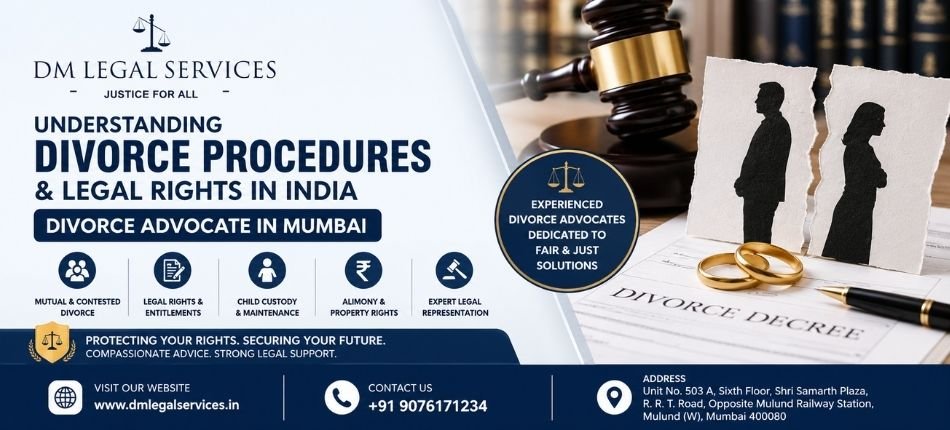
Understanding Divorce Procedures and Legal Rights in India | Divorce Advocate in Mumbai – Dm Legal Services
Introduction
Divorce is one of the most emotionally and legally challenging decisions a couple can face. Understanding the legal procedures involved can make the process less stressful and help protect your rights. Whether you are considering mutual consent divorce or facing a contested divorce, knowing the legal framework is essential.
At DM Legal Services, our experienced Divorce Advocates in Mumbai provide compassionate legal assistance throughout every stage of the divorce process.
What is Divorce Under Indian Law?
Divorce under Indian law is the legal process through which a marriage is formally dissolved by a court. Different personal laws govern divorce based on religion, including the Hindu Marriage Act, Special Marriage Act, Indian Divorce Act, Muslim Personal Law, and Parsi Marriage and Divorce Act. Each law outlines specific grounds and procedures for obtaining a divorce. Once the court grants a divorce decree, both spouses are legally free from their marital obligations and may choose to remarry. Understanding the applicable law is essential to ensure the process is handled correctly and fairly.
Types of Divorce in India
Mutual Consent Divorce
A mutual consent divorce is the simplest and most amicable way to end a marriage when both spouses agree that they can no longer live together. They jointly file a divorce petition and mutually decide on important issues such as child custody, alimony, maintenance, and property division. Since there is no dispute between the parties, mutual consent divorce generally takes less time, involves fewer court appearances, and minimizes emotional stress and legal expenses. It is often considered the most peaceful way to conclude a marriage.
Contested Divorce
A contested divorce occurs when one spouse files for divorce without the consent of the other or when disagreements arise regarding issues like child custody, alimony, maintenance, or property division. Such cases involve multiple court hearings, presentation of evidence, witness examinations, and legal arguments before the court reaches a decision. Grounds for contested divorce may include cruelty, adultery, desertion, mental illness, conversion of religion, or other legally recognized reasons. Due to its complexity, contested divorce often requires experienced legal representation.
Divorce Procedure in India
Step 1: Consultation with a Divorce Lawyer
The first step in any divorce case is consulting an experienced divorce lawyer. During the consultation, the lawyer reviews your marriage details, discusses the reasons for seeking divorce, evaluates the legal grounds, and explains the available legal options. The advocate also advises on matters such as child custody, maintenance, property rights, and documentation required for filing the case. A professional legal consultation helps clients understand their rights and prepares them for the legal process with clarity and confidence.
Step 2: Filing the Petition
After gathering all necessary information and documents, the divorce petition is prepared and filed before the appropriate Family Court. The petition includes details of the marriage, the reasons for seeking divorce, and any claims related to maintenance, child custody, or property division. Once the petition is accepted, the court issues notices to the other spouse, officially initiating the legal proceedings. Proper drafting of the petition is crucial, as it forms the foundation of the entire case.
Step 3: Court Proceedings
During the court proceedings, both spouses are given an opportunity to present their side of the case. The court may first attempt reconciliation or mediation to see if the marriage can be saved. If reconciliation is unsuccessful, the case proceeds with submission of evidence, examination of witnesses, and legal arguments from both parties. The court carefully considers all facts and applicable laws before arriving at a fair and just decision. The duration of this stage depends on the complexity of the case and the level of dispute between the parties.
Step 4: Final Judgment
Once all hearings are completed and the court is satisfied that the legal requirements have been met, it passes the final judgment. If the court finds sufficient grounds for divorce, it grants a divorce decree, legally dissolving the marriage. The judgment may also include orders regarding child custody, visitation rights, maintenance, alimony, and division of assets, depending on the circumstances of the case. This decree officially concludes the legal relationship between the spouses.
Legal Rights During Divorce
Indian law provides several legal rights to protect the interests of both spouses during divorce proceedings. These include the right to seek maintenance or alimony, claim child custody or visitation rights, protect ownership and inheritance rights, and seek relief in cases involving domestic violence or cruelty. The court ensures that decisions regarding financial support and child welfare are made fairly based on the facts of each case. Understanding these rights helps individuals make informed decisions and ensures they receive appropriate legal protection throughout the divorce process.
Documents Required
- Marriage Certificate
- Address Proof
- Identity Proof
- Wedding Photographs
- Income Documents
- Property Papers (if applicable)
- Children’s Birth Certificates
Why Hiring an Experienced Divorce Advocate Matters
Divorce proceedings involve complex legal procedures, extensive documentation, negotiations, and court appearances. Hiring an experienced divorce advocate ensures that your legal rights are protected at every stage of the process. A skilled lawyer can prepare accurate legal documents, negotiate fair settlements, represent you effectively in court, and provide practical legal advice tailored to your situation. Professional legal guidance not only improves the chances of a favorable outcome but also reduces stress, avoids costly mistakes, and helps resolve disputes as efficiently as possible. For individuals seeking reliable legal support, DM Legal Services offers experienced representation for both mutual and contested divorce matters in Thane.
Why Choose DM Legal Services?
DM Legal Services offers:
- Experienced Divorce Advocates
- Family Court Representation
- Mutual & Contested Divorce
- Child Custody Assistance
- Alimony & Maintenance Cases
- Confidential Legal Consultation
- Affordable Legal Services
Conclusion
Understanding divorce procedures empowers individuals to make informed decisions while protecting their legal rights. With expert guidance from DM Legal Services, you can navigate the legal process confidently and efficiently.
Divorce Advocate in Mumbai Divorce Advocate in Mumbai Divorce Advocate in Mumbai Divorce Advocate in Mumbai Divorce Advocate in Mumbai Divorce Advocate in Mumbai Divorce Advocate in Mumbai Divorce Advocate in Mumbai Divorce Advocate in Mumbai Divorce Advocate in Mumbai
 Previous Post
 Next Post