
 Talk to Lawyer
 Cheque Bounce Case in Thane | Dm Legal Ser
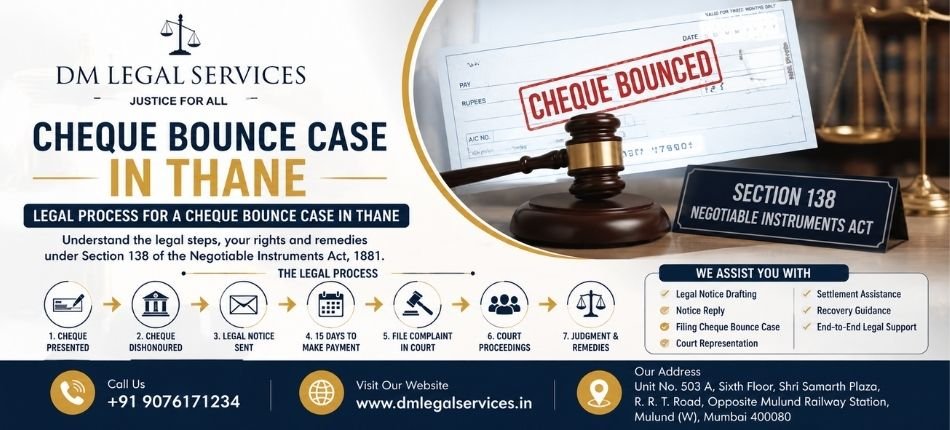
Cheque Bounce Case in Thane : Legal Process for a Cheque Bounce Case in Thane – Dm Legal Services
Cheque payments continue to be widely used in business transactions, loan repayments, property dealings, professional transactions, and personal financial arrangements. However, when a cheque presented to the bank is returned unpaid, it can create financial disputes and, in certain circumstances, legal consequences.
A Cheque Bounce Case in Thane requires careful attention to the reason for dishonour, supporting documents, statutory timelines, and the circumstances under which the cheque was issued. Understanding the legal process can help both the payee and the person who issued the cheque take appropriate steps.
What Is a Cheque Bounce?
A cheque is said to have bounced or been dishonoured when the bank refuses to process the payment and returns the cheque unpaid.
When this happens, the bank generally issues a cheque return memo specifying the reason for dishonour.
A bounced cheque does not automatically mean that every case will result in prosecution. The legal consequences depend on factors such as the reason for dishonour, existence of a legally enforceable debt or liability, compliance with statutory requirements, and evidence available to the parties.
Common Reasons for Cheque Bounce
A cheque may be dishonoured for several reasons, including:
- Insufficient funds in the account
- Amount exceeding the agreed banking arrangement
- Account closure
- Signature-related issues
- Material alteration of the cheque
- Payment stopped by the drawer
- Incorrect cheque details
- Other banking or technical reasons
The reason mentioned in the bank’s return memo is an important document when evaluating a cheque bounce matter.
What Is Section 138 of the Negotiable Instruments Act?
Cheque dishonour cases involving certain legally enforceable debts or liabilities are commonly dealt with under Section 138 of the Negotiable Instruments Act, 1881.
Section 138 lays down specific legal requirements that must generally be satisfied before criminal liability for cheque dishonour can arise.
This is why proper documentation and adherence to statutory timelines are particularly important in a Cheque Bounce Case in Thane.
Essential Requirements in a Cheque Bounce Matter
For a matter to proceed under Section 138, several legal conditions need to be examined.
These generally include whether:
- The cheque was issued towards a legally enforceable debt or liability.
- The cheque was presented within its validity period.
- The bank returned the cheque unpaid.
- A legally compliant demand notice was issued within the prescribed period.
- Payment was not made within the applicable period after receipt of notice.
- The complaint was filed within the prescribed legal timeline.
The exact applicability of these requirements depends on the facts and circumstances of each matter.
Step-by-Step Process in a Cheque Bounce Case in Thane
Step 1: Presenting the Cheque
The payee presents the cheque to the bank within its validity period.
If the cheque is honoured, the transaction is completed. If it is dishonoured, the bank returns it along with a return memo.
Step 2: Obtain the Cheque Return Memo
The return memo is important because it records the bank’s stated reason for dishonouring the cheque.
The original cheque, bank memo, transaction records, invoices, agreements, correspondence, and other relevant documents should be preserved carefully.
Step 3: Sending a Legal Demand Notice
Where the requirements of Section 138 apply, the payee generally needs to issue a written demand notice within the statutory period after receiving information regarding dishonour.
The notice should clearly identify the cheque, transaction, dishonour, amount claimed, and demand for payment.
Because statutory compliance is important, legal assistance can be valuable when drafting and serving the notice.
Step 4: Opportunity to Make Payment
After receiving the statutory demand notice, the drawer is provided the legally prescribed period to make payment.
If the amount is paid within the applicable period, the consequences under Section 138 may differ from a situation where payment remains unpaid.
Step 5: Filing the Complaint
If payment is not made within the prescribed period and the statutory requirements are otherwise satisfied, the complainant may initiate proceedings before the appropriate court.
The complaint must generally be filed within the applicable limitation period.
Documents Required for a Cheque Bounce Case
Proper documentation can significantly affect how effectively a matter can be presented.
Important documents may include:
- Original dishonoured cheque
- Cheque return memo
- Copy of legal demand notice
- Proof of dispatch and delivery of notice
- Invoice or bill
- Loan agreement
- Written contract
- Account statements
- Acknowledgment of liability
- Relevant emails, messages, or correspondence
- Transaction records
The documents required will depend on the nature of the underlying transaction.
What If You Receive a Cheque Bounce Legal Notice?
If you have received a legal notice relating to a bounced cheque, do not ignore it.
First, verify the cheque details, amount, underlying transaction, and allegations mentioned in the notice. Collect documents showing the circumstances in which the cheque was issued.
Depending on the facts, a lawyer can help assess the claim, available legal defences, payment options, and an appropriate response.
Can a Cheque Bounce Matter Be Settled?
Depending on the circumstances and willingness of the parties, cheque bounce disputes may sometimes be resolved through settlement.
A negotiated resolution can potentially save both parties time and litigation expenses. However, any settlement should clearly document the payment terms, timelines, withdrawal or disposal of proceedings where applicable, and other agreed conditions.
Legal advice can help ensure that the settlement terms adequately protect the parties.
Why Is Timing Important in Cheque Bounce Cases?
A Cheque Bounce Case in Thane involves statutory deadlines at different stages.
Delay in sending the legal notice or initiating proceedings may affect the legal remedies available. Therefore, the date of cheque presentation, date of dishonour, date of receipt of bank information, notice date, and subsequent events should be recorded carefully.
If your cheque has bounced, consider seeking legal advice promptly instead of waiting until deadlines are close.
Role of a Lawyer in a Cheque Bounce Matter
A lawyer can assist with:
- Reviewing the cheque and transaction
- Evaluating supporting documents
- Drafting legal demand notices
- Replying to cheque bounce notices
- Filing appropriate legal proceedings
- Preparing evidence and documentation
- Court representation
- Settlement negotiations
- Advising on recovery-related options
Legal strategy should be based on the specific facts and documents of the matter.
Conclusion
A cheque bounce can develop into a serious financial and legal dispute when it involves an unpaid legally enforceable debt or liability. Understanding the applicable legal process, preserving transaction records, issuing notices correctly, and complying with statutory timelines are essential.
If you are dealing with a Cheque Bounce Case in Thane, professional legal advice can help you understand your rights, obligations, and available remedies.
For assistance with cheque bounce matters, contact DM Legal Services.
Cheque Bounce Case in Thane Cheque Bounce Case in Thane Cheque Bounce Case in Thane Cheque Bounce Case in Thane Cheque Bounce Case in Thane Cheque Bounce Case in Thane Cheque Bounce Case in Thane Cheque Bounce Case in Thane Cheque Bounce Case in Thane Cheque Bounce Case in Thane Cheque Bounce Case in Thane Cheque Bounce Case in Thane Cheque Bounce Case in Thane
 Previous Post
 Next Post