
 Talk to Lawyer
Property Title Check: 7 Things to Verify Before You Buy in Mumbai
A property title check is the most important step before you pay a single rupee for a flat, plot or house. A clean title means the seller truly owns the property and can legally transfer it to you, free of hidden claims. Buying without a proper property title check is how many buyers end up in long, costly disputes. This guide lists the seven checks that an advocate normally carries out in Maharashtra, in plain language.
What is a property title check?
A property title check, also called title verification or due diligence, is a legal investigation of the seller’s ownership documents and of the property’s records. Its aim is to confirm three things: who owns the property, whether anything stops the sale, and whether the property is legally approved and usable.
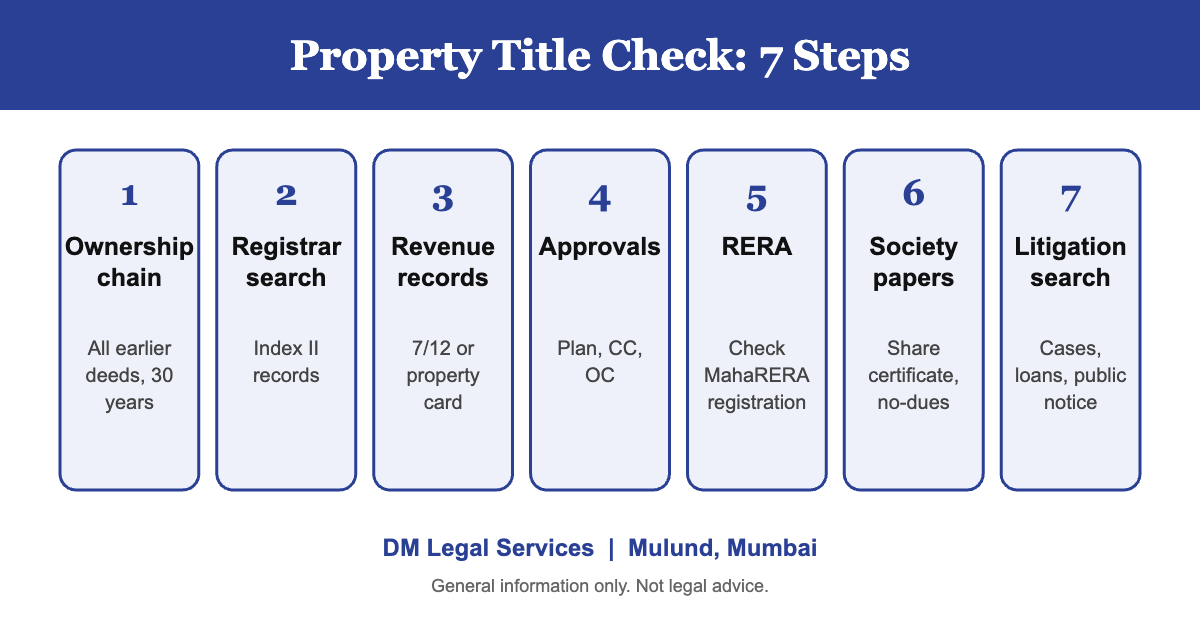
7 essential steps in a property title check
1. Verify the chain of ownership. Ask for all earlier title documents, such as sale deeds, gift deeds, partition deeds, allotment letters, wills and probate. An unbroken chain, ideally covering at least 30 years, shows how the property came to the present seller. Check that every deed is registered and stamped properly.
2. Search at the Sub-Registrar’s office. Search the registered documents for the property for earlier transactions, for example a sale to someone else or a mortgage. In Maharashtra, registered documents can be searched through the Inspector General of Registration and Stamps records (Index II).
3. Check revenue records. For land, check the 7/12 extract and mutation entries. For city property, check the property card. Names, area, encumbrances and any government or reservation entries should match the documents.
4. Confirm building approvals. Ask for the sanctioned plan, the commencement certificate and the occupation certificate (or part occupation certificate). Missing approvals can lead to action by the municipal authority and make resale or loans difficult.
5. Check RERA registration. For under-construction projects and most new projects, confirm that the project is registered with MahaRERA and review the declared possession date and approvals.
6. Review society and builder documents. For a resale flat in a cooperative housing society, check the share certificate, society’s no-objection and no-dues letters, and the last paid maintenance bills. For a builder flat, check the agreement, payment receipts and, where applicable, the conveyance to the society.
7. Search for litigation, loans and claims. Check for court cases, attachments, mortgages and loan charges. Ask the seller to get a loan-closure letter if the property is mortgaged. A public notice in newspapers inviting objections is a standard step for many purchases.
Documents to ask the seller for
- Title documents in the chain, with registration and stamp details
- 7/12 extract or property card and latest tax receipts
- Approved plan, commencement certificate, occupation certificate
- Society share certificate, no-dues letter and permission to sell
- Electricity and water bills, and the latest maintenance receipts
- Loan closure letter and original documents, if the property was mortgaged
Red flags in a property title check
Be careful if the seller cannot show original documents, the seller’s name differs between records, there is a power of attorney in place of ownership, the property is in a minor’s or deceased person’s name without proper succession papers, or the price is far below market value. Do not accept verbal assurances. Everything should be in writing and verified.
Practical tips before you pay
Do not pay a large token amount before the legal check is done. Insist on a registered agreement for sale, and pay by banking channels with receipts. Confirm the applicable stamp duty and registration charges with the Maharashtra registration authorities before the date of registration, since rates and concessions change.
Need a property title check?
DM Legal Services carries out title verification and drafts sale, gift and other deeds in Mulund, Thane and Mumbai. See our property document registration services or contact us before you pay.
Disclaimer: This article is for general information only. It is not legal advice and does not create an advocate-client relationship. Laws and court practice change, and every case depends on its facts. Please consult an advocate before acting on any information here.
 Previous Post