 Talk to Lawyer
Cheque Bounce in India: What to Do in the First 30 Days (Section 138, NI Act)
Cheque bounce is stressful for any payee, but the law gives the payee a clear, time-bound route. Under Section 138 of the Negotiable Instruments Act, 1881, dishonour of a cheque for insufficient funds (or because it exceeds the arrangement with the bank) can be a criminal offence. The catch is that every step has a deadline, and missing one can end the case before it begins. This guide explains the cheque bounce steps in plain language.
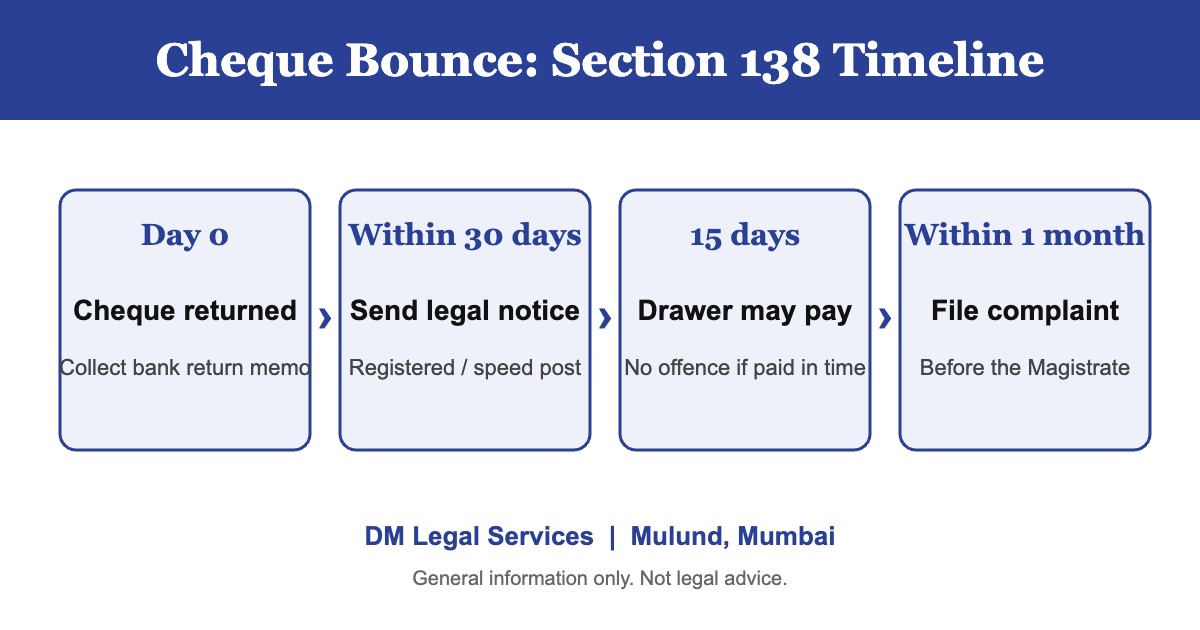
Table of Contents
When does a cheque bounce become an offence under Section 138?
Section 138 applies when all of these are true:
- The cheque was issued to discharge a legally enforceable debt or liability, not as a gift or an unenforceable promise.
- The cheque was presented to the bank within its validity period (currently three months from the date on the cheque).
- The bank returned it unpaid, with a return memo giving reasons such as “funds insufficient” or “exceeds arrangement”.
- The payee sent a written demand notice in time, and the drawer still did not pay.
Step 1: Collect the bank’s return memo
When the cheque bounces, your bank issues a cheque return memo stating the date and reason. Keep the original cheque and this memo safely. They are the foundation of your case.
Step 2: Send a legal demand notice within 30 days
You must send a written notice to the drawer demanding payment of the cheque amount within 30 days of receiving information from the bank about the dishonour. The notice should mention the cheque number, date, amount, bank and the reason for return. Send it by registered post or speed post (and, if you wish, by email as well) and keep the postal receipt and tracking record. A notice drafted by an advocate avoids technical errors that the other side may later use against you.
Step 3: Wait 15 days
The drawer gets 15 days from receiving the notice to pay the amount. If the full payment is made within this period, no offence is made out under Section 138. If the drawer does not pay, the right to file a complaint arises.
Step 4: File the complaint within one month
If the 15 days pass without payment, a written complaint must be filed before the Magistrate within one month from the date the cause of action arises, that is, from the day after the 15-day period ends. The court has the power to condone delay if you show sufficient cause, but you should never plan on that.
Territorial jurisdiction is generally decided by the location of the bank branch where the payee’s account is held (for cheques deposited for collection through the account). In Mumbai, such complaints are filed before the Metropolitan Magistrate’s court having jurisdiction.
What penalty can the court impose?
On conviction, the law provides for imprisonment of up to two years, or a fine of up to twice the cheque amount, or both. Cases are usually tried as summary trials, which are meant to be quicker.
Interim compensation and appeals
- Section 143A allows the court to direct the drawer to pay interim compensation of up to 20% of the cheque amount during the case. Courts decide this on the facts of each case, with reasons.
- Section 148 allows the appellate court, when the convicted drawer appeals, to direct deposit of a part of the fine or compensation, generally not less than 20%.
Can the matter be settled?
Yes. Cheque bounce offences are compoundable, and many cases end in settlement. The law encourages early settlement, and a court may impose costs if compounding is delayed. A written settlement, with proper payment proof, protects both sides.
Documents to keep ready
- Original cheque and the bank’s return memo
- Copy of the demand notice with postal receipt and tracking record
- Proof of the underlying debt (invoice, agreement, loan record, bank transfers, messages)
- Any reply received to your notice
Practical tips for a cheque bounce case
Note the date you received the bank’s memo and set reminders for day 30, day 45 and day 75. Do not accept a replacement cheque or a verbal promise without legal advice, as the clock does not stop. If you are the drawer who has received a notice, respond in time and seek advice before the 15 days expire.
Need help with a cheque bounce case?
DM Legal Services handles Section 138 matters, along with other criminal law cases, from notice to trial for clients in Mulund, Thane and across Mumbai. Contact us to discuss your case.
Disclaimer: This article is for general information only. It is not legal advice and does not create an advocate-client relationship. Laws and court practice change, and every case depends on its facts. Please consult an advocate before acting on any information here.
 Previous Post